Bees & Pollinators Wildflowers

  • A vibrant mix of pollinator-perfect flora
  • Contains a balanced mix of annuals, perennials and grasses
  • Wildflowers expertly picked for their bee attracting abilities
From £17.00 £14.17
From £17.00
£14.17

Product Options:


Please refresh the page in 1 minute to see the next delivery time.

Order within:
?? Days ?? Hours ?? Minutes ?? Seconds
Login to earn Reward Points for sharing!
facebook Share
pinterest Share
Loading...

How much do I need?

Simply enter the length and width of the area, to calculate how much you need.

x

m2

Reset

Product Description

Usage Guide

Aftercare

Q & A (27)

Delivery Info

Product Description carrat-down

Our Bees & Pollinators wildflower mix is a bountiful blend of wildflowers recommended on the RHS Plants for Pollinators list. Our team expertly picked each wildflower based on its attracting abilities while still maintaining a mix that is colourful, cohesive and ideal for most soil types.

Mixture Breakdown

0.5% Musk Mallow
When does it bloom?

July - August

What colour is it?

Pink / Lilac

Annual or Perennial?

Perennial

Latin Name

Malva moschata

Description

Musk Mallow is a light pink perennial that sits open and welcome for bees to land on. It’s easy to access pollen makes it the ideal flower for attracting bees alongside its sweet musky scent that invites them to pop in for more than just a pit stop!

1.5% Red Clover
When does it bloom?

May / September

What colour is it?

Purple / Pink

Annual or Perennial?

Perennial

Latin Name

Trifolium pratense

Description

Red Clover is a popular perennial that despite its name, is actually purple! It's dome-shaped flowers are relatively low-growing which makes it the perfect fodder food for livestock, but is also a fan favourite of weary bees who need a feed a little closer to the ground.

1.5% Oxeye Daisy
When does it bloom?

May / September

What colour is it?

White / Yellow

Annual or Perennial?

Perennial

Latin Name

Leucanthemum vulgare

Description

Imagine the daisy chain these would make! Oxeye Daisy is the largest member of the daisy family and its almost flat surface makes the perfect landing pad for bees and pollinators.

0.3% Agrimony
When does it bloom?

June - September

What colour is it?

Yellow

Annual or Perennial?

Perennial

Latin Name

Agrimonia eupatoria

Description

Agrimony is a spikey perennial wildflower with buttercup-like blooms which stems can grow up to 80cm!

0.2% Garlic Mustard
When does it bloom?

April - June

What colour is it?

White

Annual or Perennial?

Perennial

Latin Name

Alliaria petiolate

Description

Garlic Mustard is a pretty white perennial that can be typically found in hedgerows and woodland where it thrives in dark and moist soils. If you're wondering how it got Garlic in its name, when its leaves are crushed they smell of it!

0.1% Kidney Vetch
When does it bloom?

June - September

What colour is it?

Yellow / Orange

Annual or Perennial?

Annual

Latin Name

Anthyllis vulneraria

Description

Kidney Vetch is a bright yellow budding wildflower that sometimes gets the name Woundwort. Although this isn't the nicest nickname, it was once used for treating ailments, and of course - wounds.

2.2% Cornflower
When does it bloom?

June - August

What colour is it?

Violet

Annual or Perennial?

Annual

Latin Name

Centaurea cyanus

Description

Cornflower was previously considered a weed in amongst its cornfield annuals companions but is now accepted and widely praised as one of its finest! We're not surprised - who could dismiss those electric blue blooms?

1% Cow Parsley
When does it bloom?

May - June

What colour is it?

White

Annual or Perennial?

Perennial

Latin Name

Anthriscus sylvestris

Description

Cow Parsley is a shade tolerant wildflower that can be found naturally growing in woodland areas and its stem branches out into many clusters of tiny white flowers. It is sometimes referred to as 'Queen Anne's Lace' as it was said it would bloom for Queen Anne and her ladies in waiting and resembled the lace on their dresses.

0.1% Teasel
When does it bloom?

July - August

What colour is it?

Purple

Annual or Perennial?

Perennial

Latin Name

Dipsacus fullonum

Description

Teasel when in flower is great at attracting bees as it becomes a dome of small purple petals, with spikey leaves that are handy to land on and hold on to! Whilst this wildflower is great for bees, when it isn’t in bloom it’s also great for birds, in particular Goldfinches who feast on its seeds.

0.8% Common Knapweed
When does it bloom?

June - September

What colour is it?

Purple

Annual or Perennial?

Perennial

Latin Name

Centaurea nigra

Description

Common Knapweed can be mistaken for a thistle before it blooms, and once it does, it has magnificent starburst purple petals that resemble a firework display!

0.5% Greater Knapweed
When does it bloom?

July - September

What colour is it?

Purple

Annual or Perennial?

Perennial

Latin Name

Centaurea Scabiosa

Description

Greater Knapweed is the larger relative of Common Knapweed, with distinctly larger flower heads. Just like its smaller sibling, Greater Knapweed is a vital source of food for bees and pollinators.

0.1% Cowslip
When does it bloom?

April to May

What colour is it?

Yellow

Annual or Perennial?

Perennial

Latin Name

Primula veris

Description

Cowslip tends to have dark green and wrinkled leaves that are quite wide and start to narrow towards the end. It has flowers with five petals which are bright yellow in colour. The flowers are surrounded by a green protective casing and grow in bunches on each plant that all face the same direction.

1.5% Corn Marigold
When does it bloom?

June - October

What colour is it?

Yellow

Annual or Perennial?

Annual

Latin Name

Glebionis segetum

Description

Corn Marigold is a bright ray of sunshine on a gloomy day. Its orange-yellow petals burst into life in June and last all the way through until October. Part of the cornfield annuals family, although this annual may have one showing - it’s a showstopper!

1.5% Yarrow
When does it bloom?

June – November

What colour is it?

White / Occasionally pink

Annual or Perennial?

Perennial

Latin Name

Achillea millefolium

Description

Yarrow produces clusters of white small-petalled blooms. It is an aromatic perennial making it particularly attractive to bees and pollinators who are enamoured by its sweet scent.

0.5% Dandelion
When does it bloom?

May - October

What colour is it?

Yellow

Annual or Perennial?

Perennial

Latin Name

Taraxacum officinale

Description

Although it may be most people’s worst nightmare, dandelions are a great source of pollen for bees and butterflies alike and shouldn't be overlooked. Providing a pop of colour to your meadow, dandelions are diverse and will grow in most soil conditions.

0.1% Dark Mullein
When does it bloom?

June - September

What colour is it?

Yellow / Purple

Annual or Perennial?

Perennial

Latin Name

Verbascum nigrum

Description

Dark Mullein is a very tall wildflower that is used to growing in dry places - so is ideal for sandy soils. We love its large yellow petals and purple centre.

0.2% Foxglove
When does it bloom?

June – September

What colour is it?

Pink / Purple

Annual or Perennial?

Perennial

Latin Name

Digitalis purpurea

Description

Foxgloves are biennial wildflowers that when sown will reward you with blooms for two whole years. Their bright pink / purple bells are attractive to bees and pollinators who tunnel in to feed on its nectar.

2% Corn Chamomile
When does it bloom?

June - September

What colour is it?

White / Yellow

Annual or Perennial?

Annual

Latin Name

Anthemis arvensis

Description

Although Corn Chamomile looks like a daisy, it is part of the cornfield annuals family. With its flat and almost-level surface it makes the perfect pit-stop for bees and pollinators.

1.5% Corn Poppy
When does it bloom?

May-August

What colour is it?

Red / Black

Annual or Perennial?

Annual

Latin Name

Papaver rhoeas

Description

Corn Poppy is a vibrant and bright addition to any meadow and easily recognisable and identifiable throughout the UK. Of course it has meaning for many, and also adds a colourful pop to any wildflower plot!

2.3% Corncockle
When does it bloom?

May – September

What colour is it?

Purple

Annual or Perennial?

Annual

Latin Name

Agrostemma githago

Description

Corncockle is a pretty purple wildflower with tall stems and full petals and is a bright addition to any annuals mix. It is currently rare and endangered.

1.5% White Clover
When does it bloom?

June - September

What colour is it?

White

Annual or Perennial?

Perennial

Latin Name

Trifolium repens

Description

White Clover is a great source of food for bees and pollinators who can enjoy its nectar from a slightly shorter height. Its dome flowers create a pretty globe of white blooms.

0.5% Birdsfoot Trefoil
When does it bloom?

May - September

What colour is it?

Yellow / Red

Annual or Perennial?

Annual

Latin Name

Lotus corniculatus

Description

Birdsfoot Trefoil is part of the pea family and grows up to 35cm. It is well known for its yellow slipper like petals and red centre, which has given it the nickname of 'Eggs and Bacon'!

1% Golden Oat Grass
When does it bloom?

This is a grass seed and typically germinates at temperatures of 8 -10 degrees.

What colour is it?

Green / Beige

Annual or Perennial?

Perennial

Latin Name

Stipa gigantea

Description

Golden Oat Grass is a tufted arable grass that performs in most soil types

5% Browntop Bentgrass
When does it bloom?

This is a grass seed and typically germinates at temperatures of 8 -10 degrees

What colour is it?

Green / Beige

Annual or Perennial?

Perennial

Latin Name

Agrostis vinealis

Description

Browntop Bentgrass is a grass that performs in most soil types

30% Hard Fescue
When does it bloom?

This is a grass seed and typically germinates at temperatures of 8 -10 degrees.

What colour is it?

Green / Beige

Annual or Perennial?

Perennial

Latin Name

Festuca trachyphylla

Description

Hard Fescue is a grass that performs in most soil types

20% Slender Creeping Red Fescue
When does it bloom?

This is a grass seed and typically germinates at temperatures of 8 -10 degree

What colour is it?

Green / Beige

Annual or Perennial?

Perennial

Latin Name

Festuca rubra

Description

Slender Creeping Red Fescue is a grass that performs in most soil types

24% Chewings Fescue
When does it bloom?

This is a grass seed and typically germinates at temperatures of 8 -10 degrees

What colour is it?

Green / Beige

Annual or Perennial?

Perennial

Latin Name

Festuca rubra ssp. Commutata

Description

Chewing's Fescue is a grass that performs in most soil types

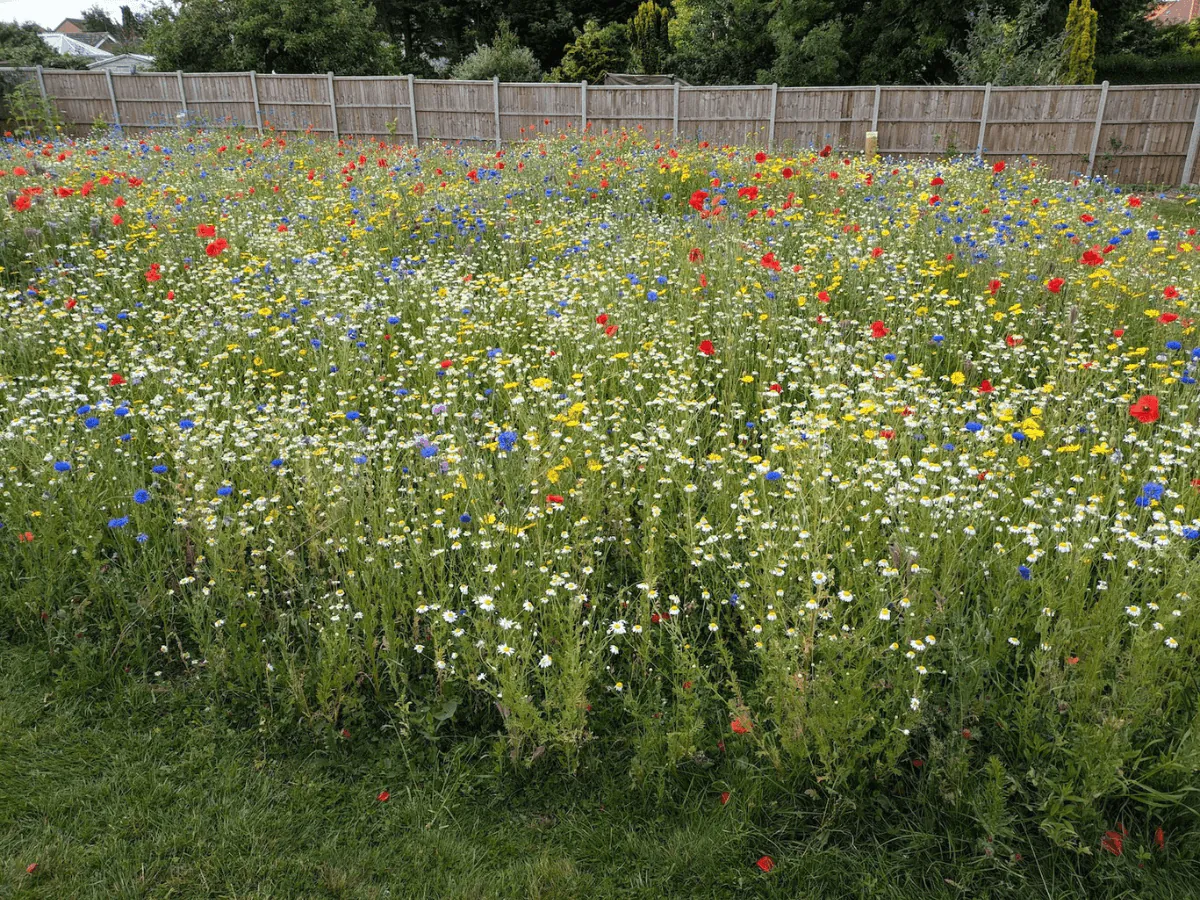
After Image
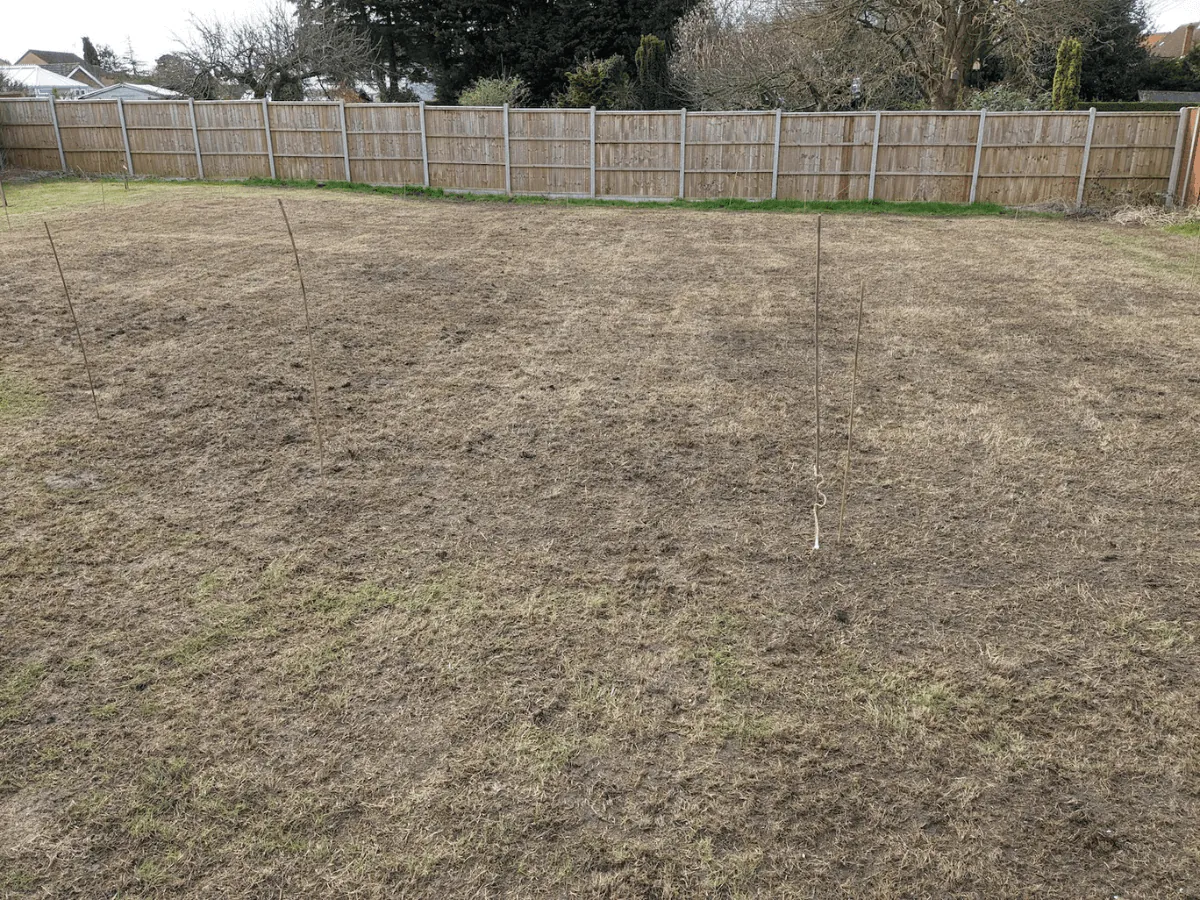
Before Image

Usage Guide carrat-down

● Remove any existing grass, plants or flora from the area where you plan to sow your wildflower seed. Failure to do this will produce poor results
● Further remove the top 5-10cm to reduce soil fertility
● Allow the area to cultivate for several weeks, and remove any weeds that may pop in the area during this time
● Do not be tempted to add top soil, compost or fertiliser to the area - wildflowers prefer low nutrient conditions
● After the cultivation period ensure to remove stones or any other debris and rake the area to create a fine, friable and level seedbed
● Scatter the seed at a rate of 5g per m2
● Rake the seed so that it is in amongst the soil
● Water the just-sown wildflower seed well
● If sowing in drought conditions, water as required to keep the area moist in the first 6 weeks after sowing

Read our full guide on how to manage your wildflower meadow here.

Sowing Rate 5g per m2
When For best results sow in March/April or in September

Aftercare carrat-down

End of year cut:

  • We recommend doing this essential end-of-year cut in autumn.
  • Your wildflowers are ready for their first cut when they have grown to 7cm and have gone to seedhead.
  • This cut can be done using your lawn mower at its highest setting or using a strimmer.

Early spring cut:

  • An early spring cut is ideal when your wildflowers are well-established.
  • This early spring cut trims back meadow grasses and helps increase the density of the wildflowers.
  • This cut also encourages wildflowers to grow better later that season.
  • Cut before the end of April, or you may stunt their growth, and they could skip blooming that year.

Summer cut (optional):

  • A cut between June and August can encourage the growth of wildflowers later in the season.
  • Cut back to 7cm tall and remove the cuttings.
  • This optional cut encourages new wildflowers to grow and flourish.

What to do with the cuttings (if you have annual wildflowers in the mix):

In dry conditions:

  • If conditions will be dry for 5-7 days, you can let the cuttings lie on the ground so the seeds drop.
  • Walk over, use a roller or shake the seedheads to encourage the seeds to fall and grow next season.
  • Then remove the plant cuttings after a week and dispose of them in your garden waste bin.

In wet conditions:

  • Lift the clippings if rainfall is forecast, and manually free up the seeds by crushing the seedhead to collect the seeds for replanting.
  • When dry conditions return, scatter the seeds across your wildflower area.
  • Alternatively, you can store your collected wildflower seeds in an envelope and replant them later.

For further reading, check out our guide on when and how often to cut a wildflower meadow.

The above photo depicts the variety of species you should expect to see in your wildflower display. Please note that certain species within this mix and all our wildflower mixes may become more abundant than others, and this varies based on the conditions in which they are sown. Taking this into consideration, your wildflower meadow will evolve and adapt year after year and change in appearance as certain species may become more dominant than others.

Q & A (27) carrat-down

Product Questions

Hi,

I am looking at a creating a no dig wildflower meadow, putting cardboard down over an old overgrown bed & some lawn then covering with a couple of inches of top soil

Can these be sown onto this & can they expect to do well at all?
Question by: Reece on 25 Feb 2026, 10:27
Hi Reece,

Yes, you can sow wildflower seed onto your setup and it should establish, but try not to make the top layer too rich. Wildflowers actually prefer poorer soils, so if the topsoil is quite fertile it can encourage grasses to take over.

As long as you keep the seed on the surface, lightly firm it in, and keep it moist, you will see good results
Answer by: Ria Doherty (Admin) on 30 Apr 2026, 13:39
Hi,
Thanks for your question! You can sow Bees and Pollinators Wildflower Mix onto your prepared no-dig bed. The cardboard will suppress weeds, and a couple of inches of topsoil provides a good base, but be careful not to bury the seeds too deeply as most need light to germinate. Keep the soil lightly moist until the seedlings establish. Germination may be slower than on bare soil, and some species might take a full season to establish, but over time you should get a healthy, vibrant meadow that supports bees and other pollinators.
Answer by: Ria Doherty (Admin) on 25 Feb 2026, 11:13
Hi, we have a field and would like to make a large area into a wild flower meadow. We can’t get rid of the grass so is there any mix, that we can just throw around onto the grass, that will grow please?
Question by: Dawn Milton on 3 Mar 2025, 19:15
Thank you for your enquiry.

If you are planning to sow wildflower seed, we recommend that wherever you plan to sow is free from existing grass and weeds.

Whilst you can sow wildflower seed into an existing grass lawn, it has varying degrees of success, so it isn't something we recommend. The existing grass would choke out the wildflower seeds and would eventually take over.

Most of our mixes with the exception of two, will contain a variety of meadow grasses, alongside annuals and perennials. These grasses have been carefully selected to help create a sustainable habitat for wildlife and to prevent weeds growing as the grass grows up and creates a nursery for the wildflowers.

However, if you do want to proceed, we would recommend the wildflower only mixes! These are Meadow Magic & Annuals.
Answer by: Lauren Skinner (Admin) on 4 Mar 2025, 08:56
Do I need yellow rattle in with the mix
Question by: Angela Davis on 19 May 2024, 11:48
Hi there,

Thanks for your question. Yellow Rattle is used on large meadows where there is a lot of grassland present, to lessen the strength of the grasses to make way for wildflowers to grow. If you are sowing a small area, then using Yellow Rattle is not necessary - however if you have a field or acre then Yellow Rattle is a good way to begin to establish a wildflower meadow.

You can read more about it below;

https://thegrasspeople.com/add-yellow-rattle-wildflower-meadow
Answer by: Roisin on 20 May 2024, 13:15
Approximately how high will this mix grow?
Question by: Kate Gregson on 5 Sept 2023, 18:16
Thank you for your question.

Whilst we can't provide the exact height that a meadow will reach, this mix contains wildflowers that reach heights of 30-100cm.
Answer by: Roisin McCann (Admin) on 6 Sept 2023, 08:00
Is it too late to sow bees and pollinators seeds now..?
Question by: Martin Hogg on 9 Oct 2022, 09:51
Hi Martin, no not all! Autumn is a great time to sow wildflowers. Now is an ideal time because the seeds need to undergo the process of stratification (a freeze) to kick start their germination. If you were to sow the seed now, nothing will happen until next spring, early in the season. If you decide to wait until next year and sow in the spring, then your meadow will flower in the summer.
Answer by: Roisin McCann on 10 Oct 2022, 13:26
We need to lift levels by 50mm - what would you recommend that has a low enough nutrient level for the bees and pollinators mix?
Question by: Neil on 21 Sept 2022, 13:47
Hi, thanks for the question. We would recommend adding low nutrient topsoil. Anything too rich can impact how the meadow establishes, meadow grasses will be more aggressive and the wildflowers will struggle to establish.
Answer by: Roisin McCann on 22 Sept 2022, 15:04
Hi, I'm planning to plant the seeds over an area that has been covered in pebbles and a black plastic lining below that for years, so it's already been stripped of any ability to grow anything - is it possible for the soil to be in *too* bad shape for even the wildflowers to grow? Should I add any topsoil or loosen up the dirt which has been packed down? Thanks!
Question by: Jennie on 12 Jul 2022, 11:11
Hi Jennie, thank you for your question. Once your lawn is back to bare soils, it would be fine to sow wildflowers. I suggest not applying topsoil to the area, as wildflowers prefer low-nutrient soils.

I have also included our step-by-step guide on how to prep and sow a wildflower meadow:

1. Remove any existing grass, plants or flora from the area where you plan to sow your wildflower seed. Failure to do this will produce poor results
2. Further, remove the top 5-10cm to reduce soil fertility
3. Allow the area to cultivate for several weeks, and remove any weeds that may pop in the area during this time
4. Do not be tempted to add topsoil, compost or fertiliser to the area - wildflowers prefer low nutrient conditions
5. After the cultivation, period ensure to remove stones or any other debris and rake the area to create a fine, friable and level seedbed
6. Scatter the seed at a rate of 5g per m2
7. Rake the seed so that it is in amongst the soil
8. Water the just-sown wildflower seed well

If sowing in drought conditions, water is required to keep the area moist in the first 6 weeks after sowing.
Answer by: Helen McGale on 13 Jul 2022, 14:28
Hi, I sowed the pollinator mix last autumn and it's now flowering with a mix of poppy, corn chamomile and cornflower. What can I expect next year? And will I have to sow more annuals, or will they self seed? Also I can't see any oxeye daisies.... Are they biennials?
Question by: Joanne Cowan on 19 Jun 2022, 15:44
Hi Joanne, thank you for your question.

No one meadow will look the same as another. This is what makes them so unique!

The success and results of your meadow rely on a number of factors such as weather, soil and available space and this can change from year to year. Annuals will appear one year and not the next whereas the perennials that did not bloom the first will make an appearance the second year.

Depending on the conditions some varieties of wildflower will thrive whilst others will struggle and this is what makes the outcome of a meadow so unpredictable yet exciting.

Annuals typically only have one showing but you can see them again the following year – if you do your prep. Annuals go to seed head each autumn and drop seeds into the soil. They are self-seeding, and almost self-sufficient but unfortunately, their process is not perfect – they need a bit of a helping hand.

You can manually assist this process by putting your mower on a high setting or cutting the wildflowers down. Then use a roller (if you’re fancy!) or your wellies to split the seed heads up to allow more seeds to get into the soil. This will result in an annual showing in the following year.
​
Oxeye Daisies are small perennials.
Answer by: Helen McGale on 20 Jun 2022, 14:29
How much meadow seed per acre
Question by: Diana salter on 3 Mar 2022, 21:00
Hi, thank you for your question. For an acre, you would need approx. 21 kilos. Just to let you our recommended sowing rate is 5 grams per square meter.
Answer by: Helen McGale on 4 Mar 2022, 12:26
Which wildflower mix would be best for sowing now?
Question by: Liz Priest on 22 Oct 2021, 07:47
Hi, you can sow any of the mixes now. Autumn and spring are great times to sow wildflower seed. Annuals will appear 60-80 days after sowing, perennials will have a small showing but will take up to one year to fully establish. If you sow in Autumn, you should expect a showing in early spring and if sowing in spring you should see blooms in summer.
Answer by: Roisin McCann on 22 Oct 2021, 07:51
Can I sow bees and pollinators mix now (mid Oct)?
Question by: Ben on 12 Oct 2021, 14:57
Hi, there are two times in the year that we recommend sowing a meadow, one is spring and the other is autumn, so if you wish to do it this year you are in good time. Now is an ideal time because the seeds need to undergo the process of stratification (a freeze) to kick start their germination. If you were to sow the seed now, nothing will happen until next spring, early in the season. If you decide to wait until next year and sow in the spring, then your meadow will flower in the summer.
Answer by: Roisin McCann on 12 Oct 2021, 15:02
Can I plant Heavy Clay Soils seeds and Bees and Pollinators now ie September
Question by: Roderick MacKenzie on 2 Sept 2021, 12:24
Hi Robert, if you have prepped the area and it is ready to sow then yes you can sow September. I would be more inclined to wait until later in the month though. Autumn is an ideal time because the seeds need to undergo the process of stratification (a freeze) to kick start their germination. If you were to sow the seed now, nothing will happen until next spring, early in the season.
Answer by: Roisin McCann on 3 Sept 2021, 12:17
We are planning to grow wildflower in a one acre field which already has grasses and a few wildflowers. When you say "clear the area before sewing", do you mean mow it or take it back to bare ground?
Question by: Lisa on 12 Aug 2021, 09:12
Hi Lisa, for best results we would recommend taking it back to bare soil. Whilst you can sow wildflower seed into existing grass, it has varying degrees of success, so it isn't something we recommend. The existing grass would choke out the wildflower seeds and would eventually take over.
Answer by: Roisin McCann on 12 Aug 2021, 09:19
I would like to grow a wild flower meadow in N Cornwall. I keep honey bees. We are unable to mow the area approx .50 acre as it is a very steep bank. Can you recommend any if your mixes for the situation. Thank you
Question by: Lesley Bolinger on 5 Aug 2021, 08:44
Hi Lesley

Thank you for your query. it is not a requirement to mow wildflower but it will have an effect on what wildflower comes through. As you keep bees our Bees & Pollinators is a mix full of wildflower varieties that are all approved by the RHS Plants for Pollinators such as Oxeye Daisies and Dandelions that are well known for their bee-attracting abilities.

Once established these meadows create an abundance of colours and a welcoming and enticing environment for bees and other insects. It is a mix of annuals, perennials and grasses, it will also establish in most soil types.
Answer by: Martin Muldoon on 5 Aug 2021, 15:13
Hi team,

Can I use this seed mix to prepare wildflower plugs?

Many thanks in advance.
Question by: Charley on 3 Aug 2021, 16:53
Yes you can use our wildflower seeds to make wildflower plugs.
Answer by: Eva Greene on 4 Aug 2021, 08:08
How long do the seeds last before they need to be planted? Can I keep some until next year?
Question by: SHONA on 9 Apr 2021, 19:58
Our seed is all fresh so will be good for about 12 months, likely 18 in reality but the less time that passes the better!
Store it in a cool, dry place and away from pests and it will be fine.
Answer by: Roisin McCann on 12 Apr 2021, 08:16
Hi,
Will the Bee & Pollinator wildseed & grasses pack be suitable in a dry, poor ground area. We generally are also quite chalky. Area does get sun and shade
Question by: Lisa Evans on 29 Mar 2021, 10:41
Hi Lisa

Wildflowers much prefer poor soil conditions so are ideal for areas like this. If you have adequate amount of sunlight this mix will establish. i would just make sure it is will watered especially if the area is particularly dry.
Answer by: Roisin McCann on 29 Mar 2021, 11:48
Hi, can I mix these with a flowering meadow pack to sew into bare flowerbeds in April?

Thanks
Question by: matt rainback on 19 Mar 2021, 14:41
Hi Matt

Thanks for your enquiry. You can mix these but I'm not sure you would need to. Both mixes contain similar wildflower species but in varying quantities. Is there a particular reason why you wanted to mix the two?
Answer by: Roisin McCann on 19 Mar 2021, 15:34
Is late November too late to sow theses seeds? Should I wait until March? In the South East UK so fairly warm climate.
Jen
Question by: Jen on 24 Nov 2020, 10:22
Hi Jen

Wildflowers can technically be sown all year round; however, we wouldn’t recommend sowing in winter for a few reasons. The low temperatures can cause the ground to freeze, making it more difficult to prepare a good seed bed for your wildflowers to call home. Many of our mixes also contain grass, whilst wildflowers are very resilient and freezing temperatures actually benefit the seeds, the same can’t be said for grass seed which will fail to germinate if not sown in temperatures above 8 degrees. So, despite wildflowers’ ability to withstand harsh conditions it’s still best to sow our mixes in spring or autumn.
Answer by: Roisin McCann on 24 Nov 2020, 10:45
Hello, can the wild meadow seeds be sown any time of the year , thank you
Question by: John gillingham on 11 Nov 2020, 08:39
Hi John

Autumn and spring are great times to sow wildflower seed. Annuals will appear 60-80 days after sowing, perennials will have a small showing but will take up to one year to fully establish. If you sow in Autumn, you should expect a showing in early spring and if sowing in spring you should see blooms in summer.
Answer by: Roisin McCann on 11 Nov 2020, 09:36

Delivery Info carrat-down

Quick Delivery Information

SERVICE COST DELIVERY TIME
Express Delivery £7.14 * 24-48 Hours (excluding weekends)
Free Delivery (orders over £80) FREE * 2-3 Days (excluding weekends)
Standard Delivery £4.70 * 2-3 Days (excluding weekends)


* Standard delivery applies to most locations. Some areas, including the Highlands, Islands, and NI, may incur an additional charge. See our delivery page for more details.


People also bought...

Flowering Meadow Wildflowers
  • Creates a delightful display of cornfield annuals and long-lasting perennials
  • Develops a year-round habitat for bees and pollinators
  • Contains sought-after UK native wildflowers
From £15.00 £12.50
View Now
Shaded Area Wildflowers
Shaded Areas Wildflowers
  • Creates a meadow of wildflowers that can grow in little light
  • Helps to provide a canopy habitat for pollinators and wildlife
  • Makes use of forgotten-about shady spaces
From £23.00 £19.17
View Now