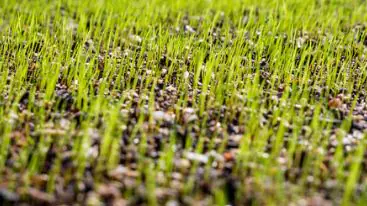
Sowing grass seed in September and October is great, but you need to make sure temperatures in your area are at least 8-10°C during the day and night without any adverse weather.
There are two times per year to sow grass seed; spring, for rapid growth and autumn, to strengthen the grass towards the year end. Both seasons are also great for lawn repairs by overseeding and reseeding.
- Spring overseeding repairs your lawn after the ravages of winter and provides you with a lush green garden to enjoy throughout the summer.
- Autunm overseeding repairs the grass from summer sun and drought damage, but it also protects your lawn against the problems caused by the incoming winter.
There are a few considerations if you have left your seeding to later in the year, but don't panic, our experts help you navigate your end-of-year sowing schedule.
Soil Temperature
For grass seed to germinate during this period, the soil must be 8-10 degrees and above, consistently for 2 weeks.
The soil will still be warm from the summer months, the air will be cooler, but there will be enough rain to help your seedlings thrive.
Checking the weather forecast is key, as you mustn't sow if temperatures have plunged, there is frost present or if there is very heavy, persistent rain.
Top Tip: You should also consider the seed mix you are planning to sow, as specialist species like Poa supina need warmer temperatures of 15 degrees and above to germinate, which will struggle to germinate if you leave it too late in the season.
Moisture
Spring sowing means you have to worry more about hot weather and water availability, as seeds need a constant supply. Cool autumn rain means less water management (and less work for you).
Regional Differences
Early Autumn in the UK is usually quite mild, plenty of opportunity to get out into the garden but you'll encounter a few showers.
You can use the rain to your advantage; it'll save you the time and effort of manually watering your seed, so if possible, sow when a sprinkling of rain is expected.
Southern England is generally warmer, and the mild conditions can last a little longer into the season, so you may get a couple of weeks in October to lay down the seed.
The north becomes cooler sooner, so keep an eye on the forecast and check the temperatures. If conditions are still good, sow as soon as possible before the temperatures drop.
When October Sowing Can Work
Sow sooner rather than later! If temperatures are mild and rain is light but consistent, then you can get stuck into the prep work.
Only then can you sow your chosen grass seed mix and not before long, your seedlings will sprout. The rain will do the watering for you but, if it is drier than expected, water the seed daily, but lightly.
After sowing, keep foot traffic to a minimum and remember to collect fallen leaves as they will retain excess moisture, block natural light reaching the seedlings and cause all manner of lawn diseases.
After around 6 weeks, your grass blades should be 5-7cm long. This indicates that you can give your lawn a trim. Remember to cut your lawn on the highest setting for its first mow.
It won't be too long before you'll be giving the lawn its last cut of the season. Remember to give your mower a good brush after each use, especially if the grass was a little damp.
How to Prepare the Soil
- Lightly rake the area to remove any dead grass, weeds or moss and to loosen the soil.
- If you have an abundance of stubborn weeds, remove them by hand or with a weed puller.
- Sow your favourite seed mix at our recommended rate of 35g per m² by using a seed spreader for even coverage.
- Sow between 5mm and 10mm beneath the surface. That’s about 3-pound coins deep, stacked on top of each other.
- Rake the seed in after sowing so that the seed is in amongst the soil, then firm down by foot or by using a roller to improve seed-to-soil contact.
- Lightly water the seed each day for the next couple of weeks until your seedlings appear and if you have sowed just as rain is due, the showers will do the watering for you.
What to do After Sowing
This is important, you want to ensure all of your prep work and seed sowing doesn't go to waste so, feed properly!
- For new lawns aim to use our QUICK RELEASE: Pre-Seed fertiliser before sowing, to provide the soil with all the nutrients your fresh seed will need to get started.
- For existing lawns and overseeding, use a SLOW RELEASE: Autumn / Winter fertiliser to protect the lawn for when the colder months roll in.
- For a fast-acting feed, try our Make it Strong liquid fertiliser, to enhance its resilience against cold winter weather and strengthen it against common lawn diseases.