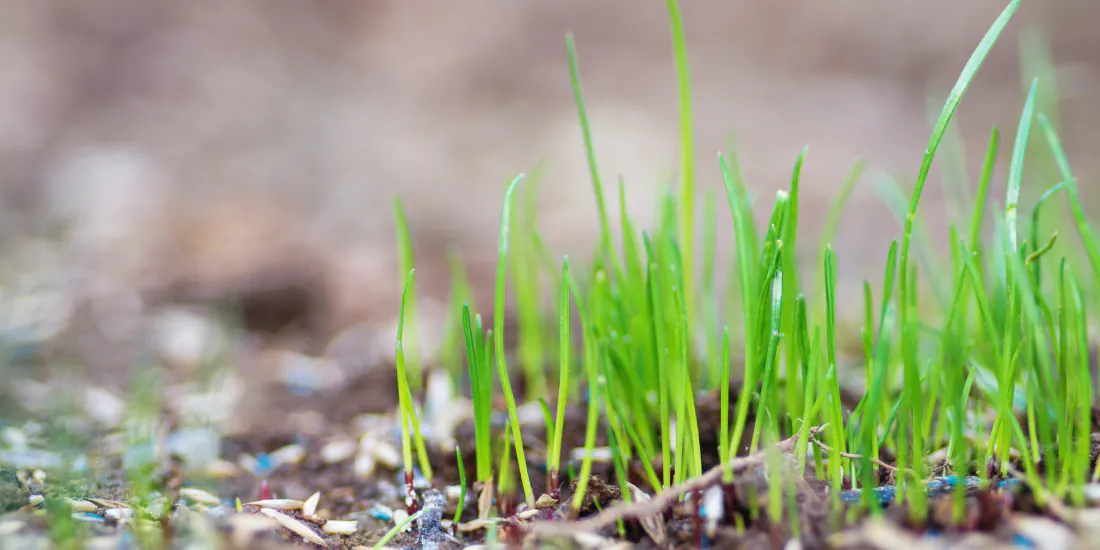
While grass seed takes around ten days to grow after sowing and will be fully established and ready for use roughly 6-8 weeks after your initial sowing.
We will explore the timeline of germination, from the perfect growing conditions, germination rates of different seed types and our top tips for getting a greener, stronger and healthier lawn.
Germination Rates of Different Grass Seed Types
A grass seed mix will contain a variety of different grasses, and each will germinate sooner than other, that’s just in their nature.
Our mixes contain a variety of grass seed species to suit the soil conditions, shade coverage and will how well they are maintained.
- Perennial Ryegrass – 5 to 10 days
- Zurich Creeping Perennial Ryegrass – 5 to 10 days
- Tall Fescue – 7 to 14 days
- Browntop Bentgrass – 7 to 14 days
- Strong Creeping Red Fescue – 10 to 21 days
- Slender Creeping Red Fescue – 10 to 21 days
- Chewings Fescue – 10 to 21 days
- Poa Supina – 10 to 21 days
- Smooth Stalked Meadow Grass – 14 to 28 days
- Hard/Sheep's Fescue – 14 to 28 days
Ideal Conditions for Grass Seed Growth
In order for grass to grow, it will need heat, air and water. The perfect combination of all three will normally result in a quick and successful germination to get your grass growing in no time.
- Temperature and climate – If temperatures were 8-10 degrees from two weeks before you sowed and are consistent from then on, then your grass will grow in no time.
- Moisture and watering – Watering your lawn is an essential part of the germination process for your grass seeds, and without it, the process will slow down significantly or even stop.
- Pesky weeds – Having properly removed weeds, by the roots, from the seedbed will ensure no competition between the unwanted guests and your new seedlings.
- Air and compaction – An adequate level of air from decompacted soil will allow the roots to breathe and grow successfully by taking in oxygen and removing carbon dioxide.
- Soil quality and acidity – Free from weeds and mosses, level, has adequate drainage and is not too acidic. A pH between 6.0 and 7.0 is the sweet spot.
- Seed-to-soil contact – By lightly raking the seed into the soil, you’ll have optimal contact for germination. A good rule is to sow the seeds to the thickness of three £1 coins stacked on top of each other.
- Shade and sunlight – Depending on the trees and fences blocking the sunlight reaching your lawn, different grass types thrive better in certain conditions. Fescues are great in the shade while perennial ryegrass thrives in the sunshine.
- Use and foot traffic – Keeping your lawn idle from footfall, garden games and roaming pets while your seeds germinate will help prevent seed displacement and soil compaction.
The Grass People’s Specialist Grass Seed Mixes
We have an extensive range of home grass seed for every soil type, shade type and purpose. You can find out more about these below!
Seeds that grow on lawns with no special requirements
- SUPERSTAR: Back Lawn – For everyday lawns that are hardwearing without compromising on looks.
- FAMILY: Kids and Pets – For family lawns that take a real battering with all the fun kids and pets throw at it.
- STATEMENT: Front Lawn – For ornamental lawns with a picture-perfect finish.
- RESTORE: Self-Repair Lawn – For tired lawns that look worse for wear and cuts out the need for regular overseeding.
Grass seed that loves to grow in shade
- STEADFAST: Shade – For shady lawns suffering from shadows caused by trees or fences.
- STEADFAST: Ultra Shade – A specialist mix solving your lawn’s problem of permanent shade.
Grass species that thrive in specialist soil conditions
- IMPRESS: Clay Master Lawn Seed – A grass seed mix designed to thrive in troublesome clay soil conditions.
- THRIVE: Sandy Soils – For grass growth in low-nutrient, sandy soil conditions.
Grass seed that provides an alternative lawn
- ECO: Clover Lawn – A specialist clover and grass seed mixture that creates an eco-friendly, drought-tolerant lawn.