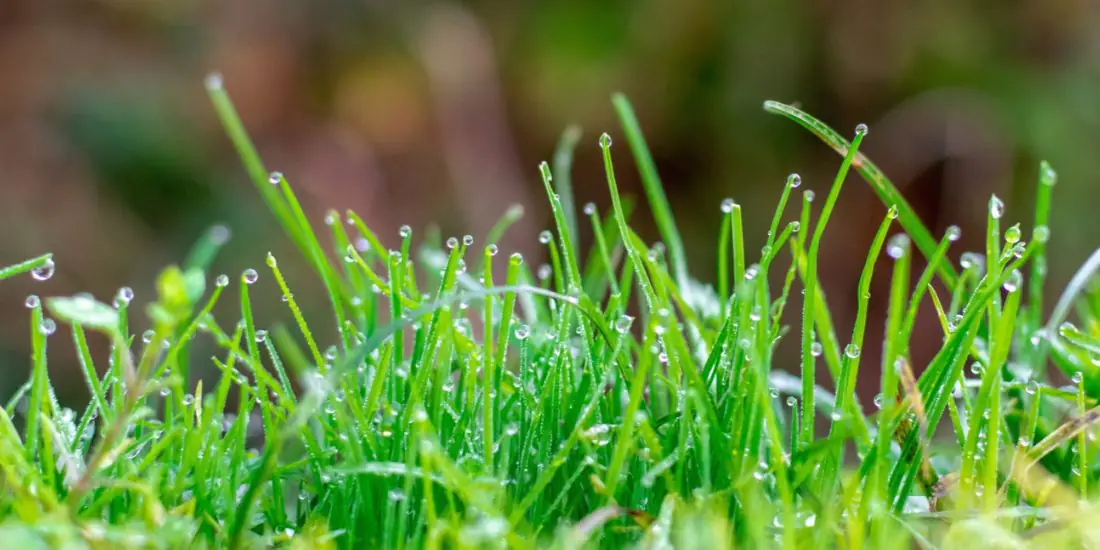
During the post-summer months, unsettled autumn weeks can make lawn repairs optimal and challenging at the same time if you have a problem with lawn moisture retention.
Standing surface water, mud, fallen leaves, grass yellowing, moss, hard soil and fungi are all signs that your lawn is too wet.
How to Tackle a Wet Lawn
- Removing leaves and debris will allow light to reach the surface of the lawn, helping grass growth and allowing moisture to evaporate.
- Aeration with a lawn fork or aerator will open compacted soil, so moisture and air can move freely through the ground and not stand on the surface.
- Feeding your lawn with a high nitrogen fertiliser will strengthen the lawn against weeds and moss, which not only contribute to the dampness but also thrive in it.
- Treating moss as soon as it appears with an all-in-one Feed, Weed and Moss Killer will feed the lawn, fight moss and prevent it from taking over your wet lawn.
Lawn Diseases and Fungus
Damp conditions can lead to diseases such as fusarium patch (snow mould), fairy rings, red thread and toadstool mushrooms.
Depending on the condition, how you treat each disease will vary but one thing is for sure... Fertilising the lawn will help prevent many of these diseases from developing and strengthen your grass if an infection or infestation does occur.
Applying an autumn lawn feed such as SLOW RELEASE: Autumn/Winter or QUICK RELEASE: Autumn/Winter in early autumn will help combat these by strengthening the grass plants and giving your lawn an attractive green colour.
Fallen Leaves and Debris
Any debris that has blown into or landed on your garden is shading that small area of grass, blocking natural light and trapping moisture.
Debris can include old grass clippings, thatch and moss, which can be removed by raking or scarifying, allowing air and moisture to reach the soil or evaporate.
During the cooler months of the year, fallen leaves from neighbouring trees will litter your lawn, cover its surface and retain an excess of moisture.
Grass Discolouration and Yellowing
A lawn in distress will turn yellow and you'll need to investigate to understand the cause, but if moisture is standing in areas of the lawn or the lawn has been submerged for a period of time, causing it to die and yellow.
Typically, the yellowing means a lack of nutrients/nitrogen and that the lawn needs to be fed with a fertiliser, but it can also hint at a few other issues, like soil compaction and poor drainage.
Soil Compaction
Lawns can become compacted throughout the year, but heavy compaction is usually evident during the summer, when the soil lacks moisture and the garden receives heavy foot traffic.
Soil compaction restricts surface moisture from draining, so fresh water and nutrients struggle to reach the grass roots. If rain continues the water continues to accumulate and eventually waterlogging the lawn, submerging the grass causing discolouration and dying swards.
Aerating the lawn will create air channels to help soil compaction and allow the water to move through the soil. Using a garden fork or aerator, push the spikes into the surface around 30mm deep, wiggle it backwards and forwards and then pull out. Repeat this every 10cm across the lawn.
Surface Water and Muddy Patches
Heavy foot traffic and shade will create heavy compaction in the soil with a wet, muddy surface. Rainwater collects and stands on the surface, unable to drain into the soil due to the compaction and unable to evaporate due to the lack of light reaching the area.
To alleviate this problem, firstly, try to cut back or remove what is covering the area in shade, if possible, to allow sunlight to reach the area. Loosen the soil with an aerator to help drainage, and after the wetness clears, reseed the area with fresh seed.
Moss
Moss loves moisture and shady areas and can spread very quickly. It is a clear sign of a wet lawn, but it is also a very common issue, unlike waterlogging or muddy patches.
Moss can be easily treated by spreading a fertiliser such as Feed, Weed and Mosskiller across the affected areas of the lawn, and within two weeks, the weed will have died and turned black. Then remove the dead moss by vigorously raking the surface.